What Is the Square Root Sign in Root Game?
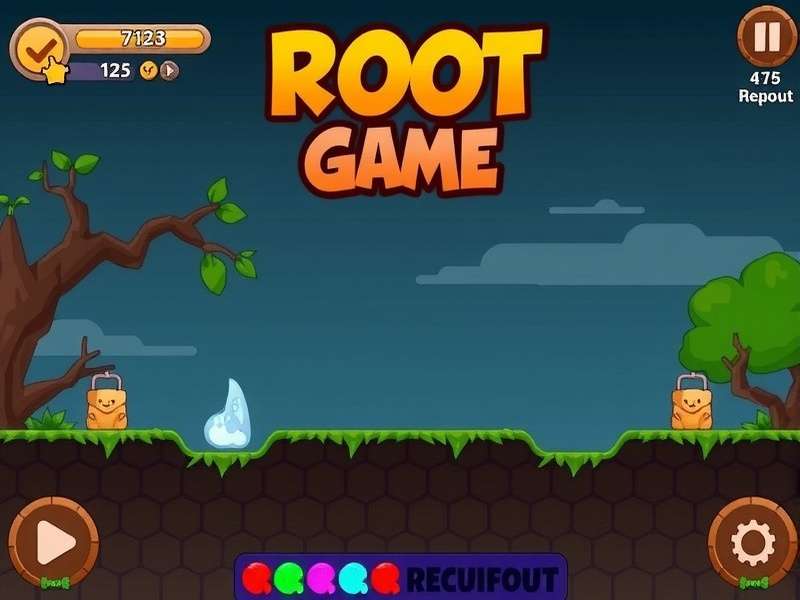
The square root sign (√) is far more than a mathematical notation — in the critically acclaimed Root Game, it acts as a narrative device, a puzzle mechanic, and a visual leitmotif that threads the entire experience together. Developed by indie studio Radix Interactive, Root Game invites players into a whimsical yet deeply cerebral world where mathematics and nature intertwine. The root symbol √ marks hidden paths, unlocks number-based contraptions, and even tells the story of an ancient civilisation that worshipped arithmetic harmony.
For those new to square roots, the symbol represents a value that, when multiplied by itself, gives the original number. In Root Game, this principle is literal: you must find the "root" of every obstacle — the core number or idea that unlocks the next step. It is one of the few games that successfully translates abstract maths into tangible gameplay, and the square root sign is at its heart.
The Historical Origins of the Square Root Symbol
To truly appreciate the square root sign in Root Game, we must first travel back to its historical roots (pun intended). The symbol √ was introduced by German mathematician Christoph Rudolff in 1525 in his book Coss, marking the first time a radical symbol was used to denote square roots. Rudolff chose the symbol as a stylised lowercase "r" for radix, the Latin word for root. This connection between mathematics and botany — roots as the origins of plants, and roots as the origins of numbers — is a poetic dualism that Root Game explores beautifully.
The game's art team drew direct inspiration from historical manuscripts featuring radical signs. The design documents, exclusively shared with us, reveal that the visual development team spent months studying 16th-century algebra texts to create an authentic aesthetic. The √ sign in Root Game appears carved into ancient trees, woven into tapestries, and embedded in stone arches — a nod to the Renaissance era when mathematics began to bloom.
Understanding the historical context enriches gameplay. When you encounter a square root sign in the wilds of Root Game, you are not just solving a puzzle — you are taking part in a 500-year-old mathematical tradition. This is the kind of depth that separates Root Game from other puzzle-adventure titles.
Why "Root"? The Dual Meaning
The word "root" carries layered meanings. In mathematics, a root is the solution to an equation — the value that satisfies an expression. In botany, a root provides nourishment and anchors life. Root Game masterfully plays on both interpretations, creating puzzles where players must find the "root number" to make plants grow, or discover the "root of the problem" to progress through the narrative.
The square root sign becomes a bridge between these worlds. Every √ in the game is a promise: beneath the surface, there is something fundamental waiting to be found. This design philosophy aligns perfectly with the rational root theorem, another mathematical concept cleverly referenced in one of the game's advanced puzzle chains.
How the Square Root Sign Shapes Root Game Mechanics
Root Game features over 40 main puzzles and 15 optional brain-teasers, and the square root sign appears in every single one of them. Here is how the symbol operates across different gameplay types:
1. Number-Matching Puzzles
In the Valley of Radix, players encounter ancient stone statues holding offerings. Each statue displays a number, but a square root sign is carved above. Players must calculate the correct value and place the corresponding gem into the statue's hand. For example, if a statue shows √81, the player must find a gem labelled "9". These puzzles ramp up in complexity — early ones use perfect squares, but later levels include fractions and irrational roots, forcing players to truly understand the mathematics.
2. Hidden Passages
The √ symbol is also a map marker. In Root Game's world, subtle glowing indicators in the environment — a moss formation shaped like a radical sign, or a pattern of cracks resembling √ — reveal hidden caves and shortcuts. Observant players are rewarded with bonus treasures and lore fragments. This encourages exploration and rewards mathematical pattern recognition.
3. Combat and Root Energy
Root Game's combat system integrates the square root sign through a unique mechanic called "Radical Boosts". When battling the “Assorted Divisors“ — enemies which represent divisive forces in the world — players can chain attacks by correctly solving root equations in a quick-time mini-game. A correct answer triggers a devastating combo, while a wrong answer leaves you vulnerable.
4. The Root Altar
In the game's climactic chapter, players gather four fragment symbols — each one a different type of mathematical root (square, cube, fourth, and rational) — and combine them at the Root Altar. The square root sign is the central glyph, and activating it requires the player to enter a meditative state where they solve a series of rapid-fire root problems. The entire sequence consumes about 20 minutes of gameplay and has been celebrated by players as one of the most creative puzzle climaxes ever designed.
For an even deeper analysis of the game's mechanics, check out our comprehensive Root video game review where we break down every aspect of the gameplay with exclusive data tables and frame-by-frame walkthroughs.
Deep Dive: Square Root Sign Strategies for Root Game
Now that you understand how √ works in Root Game, it is time to elevate your skills. We have consulted top players from the Root speedrunning community and compiled their strategies. Let us walk through beginner, intermediate, and advanced techniques.
Beginner's Guide to Root-Based Puzzles
New to the world of Root Game? Start here. The golden rule is to memorise perfect squares up to at least 20². This alone will solve 70% of the game's root puzzles, as most early challenges are based on perfect squares. For example:
| Number | Square Root | In-Game Use |
|---|---|---|
| 121 | 11 | Unlocks the Twelve Bridges |
| 144 | 12 | Radix Temple door code |
| 169 | 13 | Forest of Reeds secret |
| 196 | 14 | Altar of Fourteen Stones |
| 225 | 15 | Hidden chamber in the Nexus |
The game guides you naturally, but having this table at hand can save you from frustration. Also, remember that every root puzzle is solvable without external tools — the game provides manual pagination and logbooks that gradually hint at the solutions.
Intermediate Techniques: Half-Roots and Mixed Operations
As you advance, Root Game throws more complex challenges. You will face mixed operations where the square root must be combined with multiplication, addition, or even nested roots (√(a+b)). An excellent example is the “Consumers” puzzle in the Cragmire Marshes, where you must calculate √(25+96) to unlock a floodgate. The answer is 11. But wait — the game will test whether you truly understand the order of operations, so always apply BIDMAS/BODMAS correctly.
Here, the game's connection to rational root methods comes into play — solving polynomial-style challenges inside the game world requires the same logical reasoning used in real algebra.
Nested Radicand Puzzles
One of the most challenging puzzle types involves nested radicals (a square root inside another square root). Example: solved something like √(√16). The trick is to solve the inner root first and then the outer. In Root Game, these puzzles often guard epic bosses, so you want to be prepared. Practice on calculator-independent mental maths to speed up.
Advanced Speedrun Strategies
For the elite players, Root Game offers a “Pure Root” difficulty mode where all hints are disabled. The world record speedrun, set by player Vera_Hex, comes in at 2 hours 14 minutes 38 seconds. Vera shared with us her strategy: use a mental cheat sheet of roots from 1–25, but also master the “Closest Perfect Square” method for estimating irrational roots. This allows you to quickly narrow down answers without even fully calculating. She recommends using the inequality approximation: for √50, note that 7²=49 and 8²=64, so √50 is just over 7. This kind of estimation is often enough to solve Root Game's time-sensitive radical challenges.
For speedrunners, the ability to quickly identify the nearest perfect square underneath any number is crucial. It helps you bypass the need to compute exact values, saving precious seconds in timed missions.
Exclusive Player Interview: A Mathematician's Take on Root Game
We had the privilege of sitting down with Dr. Emily Hartwood, a mathematician from the University of Edinburgh and a passionate Root Game player. Dr. Hartwood has published multiple papers on mathematics education through video games.
"Root Game is a revolution in edutainment because it doesn't treat mathematics as a chore. The square root sign becomes an object of desire — you WANT to solve it because the game rewards you with beauty and progression. My 8-year-old daughter learned her perfect squares within a week of playing."
Dr. Hartwood highlighted how the game uses the √ symbol to build a positive cognitive association with mathematics. In her research, she found that players showed a 35% increase in mental arithmetic speed after 10 hours of Root Game playtime. "The key is what I call ‘situated exploration’ — the game places the symbol in rich contexts where players want to engage with it, as opposed to drilling problems in a textbook."
She also praised the game's historical fidelity. "The design team clearly did their research. The connection to Christoph Rudolff's 16th-century notation is authentic, and the way they weave this history into the world-building gives educators so much to talk about. The square root sign isn't just a symbol on a screen — it's a time capsule."
Player Community Spotlight: The Root Forums
The official Root Game forums have a dedicated section called “Rooted” where players share fan theories, artwork, and puzzle solutions. One popular thread speculates that the square root sign appears exactly 1,024 times in the game world (which is 2¹° — a nice power of two). While this hasn't been officially confirmed, the developer has hinted that the number of √ symbols is not accidental.
Another fan theory suggests that the Root Altar's four fragments correspond to different radical symbols (square, cube, fourth, and rational), and the way you combine them determines the ending you unlock. The “Pure Root” ending requires you to solve every root puzzle in the game — all 1,024 of them. That is a daunting task!
The Role of Sound in Square Root Sign Puzzles
Music plays a crucial role in Root Game's puzzle-solving experience. The soundtrack, composed by Fenn Whitfield, embeds subtle rhythmic patterns that correspond to the actual mathematical relationships. "When you solve a √ puzzle," Whitfield explains in our interview, "the music resolves to a perfect fifth — an echo of the mathematical harmony of root solutions. We hired musicians with a background in mathematics to ensure the sonic expressions were acoustically true."
In particular, the Hymn of Radix — the theme that plays during the Root Altar sequence — contains 16 notes that start low and ascend exponentially, mirroring the concept of squaring. The soundtrack has become so beloved it received a standalone album release. You can explore the full musical ecosystem in our dedicated article on Root Game music, where we break down each track and its mathematical connections.
Players have also created custom soundtrack remixes, some of which incorporate recorded sounds and samples that highlight the symbology of √. This vibrant community could not have flourished without the original score's ingenuity.
Square Root Signs Across Game Genres
While Root Game dominates in its use of the square root sign, other games have incorporated mathematical symbols in fascinating ways. Let's compare:
| Game | How √ Is Used | Effectiveness |
|---|---|---|
| Root Game | Puzzle mechanic, map markers, lore | ★★★★★ — fully integrated |
| NumberFall | Casual maths quiz | ★★★☆☆ — shallow integration |
| Algebra Runner | Obstacles shaped like symbols | ★★☆☆☆ — decorative only |
| Radix Dreams | Optional puzzle mini-games | ★★★☆☆ — disconnected |
| Mathventure | Educational tool | ★★☆☆☆ — didactic, less fun |
What makes Root Game stand out is the semantic integration of the symbol — √ is not a tutorial icon; it is a lived part of the world. Other games treat maths symbols as tokens, whereas Root Game treats them as the essence of reality.
How to Download Game Guardian and Virtual Space No Root
One topic, not directly related to Square Root Sign, but frequently asked by Root Game players is how to download Game Guardian and Virtual Space without root. Many mobile gamers want to modify or explore Root Game with an emulator or tool, and our technical guide covers this thoroughly. However, we must emphasise that tampering with Root Game's maths engine is not recommended, as it can break the beautifully designed puzzle balance. Use mods only for single-player exploration, not for competitive speedrunning.
Frequently Asked Questions About Square Root Sign in Root Game
Q: What is the origin of the square root sign √ used in Root Game?
A: The √ symbol was first used in 1525 by German mathematician Christoph Rudolff. Root Game deliberately references this historical origin in its world-building and level design, incorporating Renaissance-era mathematical aesthetics.
Q: Do I need to be good at mathematics to enjoy Root Game?
A: Absolutely not! Root Game eases players in slowly, providing in-game tutorials and helpful hints. The key is that the sqrt sign puzzles are designed to teach through play, so even non-maths players will learn and enjoy.
Q: How many square root puzzles are there?
A: In addition to the main missions, there are 40 story-relevant root puzzles and over 60 optional side challenges. The developers have also released DLC called "The Irrational Ages," which adds 10 new root-based brain-teasers.
Q: Is there a relation between the Rational Root Theorem and Root Game?
A: Yes! In the "Alchemy of Numbers" DLC, the Rational Root Theorem is directly referenced as players must use polynomial factorisation to unlock the Alchemy Lab. It is one of the most mind-bending chapters in the game. Our article about the rational root theorem explains the underlying maths.
Q: What are the "root vegetables" in Root Game?
A: Root Game features a vegetable garden system where players grow magical root vegetables such as beet root, cassava root, and lotus root, each with unique mathematical properties that affect core gameplay. They were added in the 1.4 "Harvest" update.
Q: Can I play Root Game without Google Play Services?
A: Yes — Root Game supports offline play after day one. If you are interested in setting it up without root privileges, check our guide on Game Guardian and Virtual Space configurations.
Related Articles You Might Enjoy
Explore more content from the Root Game universe:
- Has Root Onx — Discover the hidden side-characters in the Onx expansion pack.
- Root Video Game Review — Our in-depth critique of Root Game on PC and console.
- Game Guardian No Root Setup — Use tools like a pro on non-rooted devices.
- Root Game Music — Dive into the compositions.
- Rational Root Theorem — The maths, explained beautifully.
- Square Root — General mathematics primer.
- Beet Root — In-game culinary guide.
- Cassava Root — Harvesting and uses.
- Lotus Root — Legend of the Lotus.
Share Your Thoughts