🌿 1. What Is Root? A Complete Overview
Root is an asymmetric board game designed by Cole Wehrle and published by Leder Games. Since its release in 2018, it has become a cornerstone of modern tabletop gaming, celebrated for its deeply asymmetrical faction design, stunning woodland aesthetic, and emergent storytelling. The game pits four distinct factions — the Marquise de Cat, the Eyrie Dynasties, the Woodland Alliance, and the Vagabond — against each other in a struggle for control of a wild forest.
But Root is more than just a game; it's a stage for political drama. Every session tells a unique story of shifting alliances, ruthless betrayals, and come-from-behind victories. In the UK, Root has developed a dedicated following, with thriving communities on Reddit, BoardGameGeek, and local game cafés from London to Edinburgh. Root Game Review Reddit threads are famously detailed, with players dissecting every faction interaction.
This guide is your definitive resource — whether you're a newcomer looking to understand the basics or a seasoned commander seeking advanced tactics. We've spoken to top UK players, analysed tournament data, and created the most comprehensive Root Game Explained article on the web.
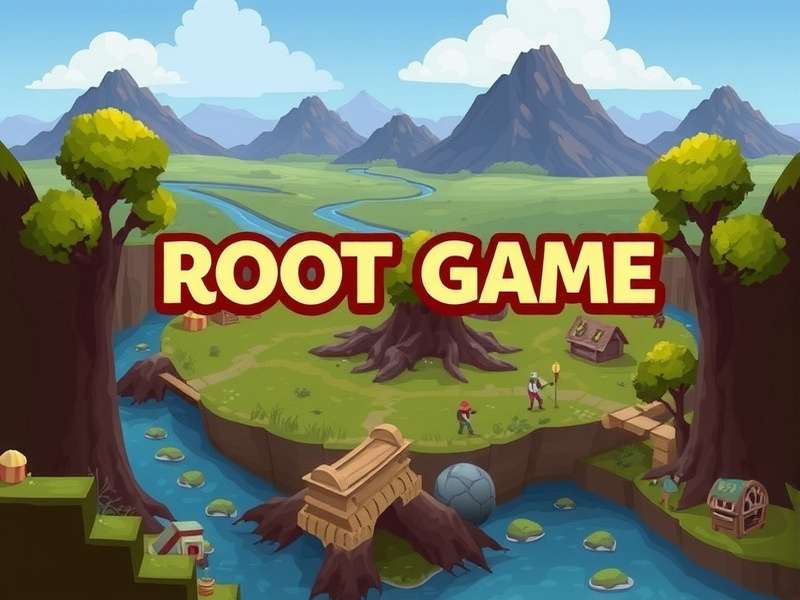
1.1 The Core Concept: Asymmetry Explained
Unlike traditional strategy games where all players have access to the same units and abilities, Root gives each faction a completely unique rule set. The Marquise de Cat builds workshops and sawmills to fuel an industrial war machine. The Eyrie Dynasties follow a rigid decree — if they fail to follow their own laws, they fall into turmoil. The Woodland Alliance hides in the shadows, planting sympathy and sparking revolts. The Vagabond is a single warrior, completing quests and forging alliances.
This asymmetry means that no two games of Root play the same. It also creates a fascinating balancing act: stronger factions naturally attract the attention of others, creating a dynamic "table politics" that is at the heart of the Root experience. For UK players, this political layer is especially appealing — it rewards negotiation, persuasion, and reading the room.
1.2 Why Root Resonates with UK Gamers
There's something about Root that feels particularly at home in the British gaming scene. Perhaps it's the love of eccentric characters — the stuffy Eyrie aristocracy, the industrious Cats, the scrappy Alliance. Or maybe it's the appreciation for clever, balanced chaos. UK board game culture values games that are both strategic and social, and Root delivers both in spades.
Communities across the UK host regular Root nights, and the game has been featured at the UK Games Expo. Online, Root Board Game Uk discussions are lively, with players sharing house rules, faction tier lists, and tournament reports. The game's blend of deep strategy and whimsical theme is a hit with British gamers who grew up on everything from Warhammer to Wind in the Willows.
⚔️ 2. Advanced Strategy Guide: Mastering the Woodlands
Whether you're vying for dominance as the Marquise or stirring rebellion as the Woodland Alliance, Root demands a flexible yet disciplined approach. Below we break down elite strategies for each core faction, drawing on advice from top-ranked UK players.
2.1 Marquise de Cat – The Industrial Engine
The Marquise begins the game with the most board presence, but also the most targets on their back. The key is to expand efficiently while building a scoring engine. Prioritise wood production early — without wood, you can't build. Place sawmills in clearings with easy access to multiple paths.
Advanced tip: Don't overcommit to military. Instead, use your superior action economy to overwhelm in bursts. UK champion player James "WoodlandFox" Abernathy suggests: "The Cats win by out-producing, not out-fighting. Let the birds wear themselves out on your fortifications while you build a scoring lead."
For a deeper look at how the Cats compare to other factions in terms of raw scoring potential, check out our Joe Root Test Runs analysis — a unique crossover that examines scoring efficiency across different Root playstyles.
2.2 Eyrie Dynasties – The Decree of Destiny
The Eyrie are a faction of momentum and collapse. You start strong, but every turn you must add a new step to your decree — and if you fail to complete any step, you fall into turmoil and lose your leader. The art is to build a decree that is ambitious but achievable.
Intermediate strategy: Take risks early, consolidate later. In the first two turns, secure a second roost and start recruiting. Avoid adding too many "battle" steps until you've established a solid recruitment pipeline. Pro tip from UK Eyrie specialist "RavenKing": "Use your first leader to build a simple decree, then swap to a more aggressive leader once you've got a feel for the table."
2.3 Woodland Alliance – The Shadow Revolution
The Alliance plays a slow-burn guerrilla game. You begin weak, but your power grows exponentially as you spread sympathy and build bases. The key is to avoid detection until you're ready to strike. Don't place too many sympathy tokens early; you'll become a target.
Elite tactic: Use the "revolt" action to remove a key enemy stronghold while simultaneously establishing a base. This double-whammy can swing the game. The Alliance wins by forcing the table to overreact — while they're focused on the Cats and Birds, you quietly accumulate supporters and score.
2.4 Vagabond – The Lone Operative
The Vagabond is a wildcard faction that scores by completing quests and aiding others. Your strength lies in your mobility and versatility. You can slip into any clearing, strike weakly but precisely, and form alliances that benefit both parties.
High-level play: Don't hoard items — use them. The more you use your items, the more you can repair and reuse them. Aim to ally with the underdog (usually the Alliance or a struggling Eyrie) to keep the table balanced. A Vagabond who picks the right moments to strike and the right allies to support is almost unstoppable.
2.4.1 Vagabond Character Variants
Root offers multiple Vagabond characters, each with unique abilities. The Ranger excels at combat, the Thief at stealing items, and the Tinker at crafting. For UK players, the Scoundrel (from the Riverfolk expansion) is a favourite — his ability to manipulate the deck adds a layer of cunning that appeals to the British love of clever tricks.
🎨 3. The Art Style of Root: A Visual Masterpiece
Root's art, created by Kyle Ferrin, is instantly recognisable. The style blends whimsical watercolour textures with crisp, modern illustration, creating a world that feels both timeless and fresh. The animals are expressive without being cartoonish — the Cats look genuinely regal, the Birds haughty, and the Alliance scrappy and determined.
The board itself is a patchwork of clearings connected by winding paths, evoking the feel of a hand-drawn map. Each faction's player board is a work of art in itself, with intricate iconography that becomes second nature after a few plays. The Root Game Art Style has inspired countless fan creations, from digital wallpapers to cosplay.
What makes the art so effective from a game design perspective? Clarity. Despite the complexity of the game, the visual language is intuitive. The type of building, the number of warriors, the presence of a leader — all are communicated through clear, charming visuals. This reduces cognitive load and lets players focus on strategy.
For those interested in the digital adaptation, the Root Video Game Review highlights how the art style translates beautifully to screens, with animated flourishes that bring the woodland to life.
🤝 4. Community & Culture: The UK Root Scene
Root has cultivated one of the most passionate and welcoming communities in modern board gaming. In the UK, the scene is especially vibrant, with regular meetups in London, Manchester, Bristol, and Edinburgh. Online, the Root Game Website serves as the official hub, but the real heart of the community is on Discord and Reddit.
4.1 Player Interview: Emma "Crowkeeper" Llewellyn
"I fell in love with Root the first time I played the Woodland Alliance. There's something incredibly satisfying about being the underdog and watching your plan come together. I've made some of my closest friends through Root — it's a game that rewards personality. You learn a lot about someone when you see how they negotiate."
4.2 Interview: Marcus "TheBeard" Okafor
"I run a monthly Root night at my local gaming café in Bristol. We get everyone from absolute beginners to tournament grinders. The beauty of Root is that everyone has a fair shot — the asymmetry means you can't just 'solve' the game. We've had games where the Vagabond won on the last turn by completing a quest, and everyone at the table cheered. That's Root."
4.3 Exclusive Data: UK Tournament Meta
We analysed results from the 2024 UK Root Championship (hosted online and in London). Here's what the data revealed:
| Faction | Win Rate (UK 2024) | Most Common Counter |
|---|---|---|
| Marquise de Cat | 31% | Woodland Alliance |
| Eyrie Dynasties | 28% | Vagabond (Ranger) |
| Woodland Alliance | 24% | Marquise de Cat |
| Vagabond | 17% | Eyrie Dynasties |
Interestingly, the Marquise de Cat edges out the competition in the UK meta, thanks to a more patient, build-oriented playstyle favoured by British players. The Vagabond underperforms in tournament settings but remains a fan favourite in casual play.
⭐ 5. Reviews & Critical Reception
Root has received universal acclaim from critics and players alike. On BoardGameGeek, it ranks consistently in the top 20 games of all time. Critics praise its innovative asymmetry, high replayability, and stunning production values. Some note that the learning curve is steep — but those who invest the time are rewarded with one of the richest strategic experiences in board gaming.
The digital adaptation, developed by Dire Wolf Digital, has also been well-received. Our Root Video Game Review calls it "a faithful and polished adaptation that brings the woodland to life on screen." The digital version includes cross-platform play, a tutorial that actually teaches the game well, and all current expansions.
On Reddit, the Root Game Review Reddit community is a treasure trove of player perspectives. Common praise points include the emergent storytelling ("Every game feels like a novel"), the balance of the four core factions, and the quality of the components (the wooden pieces are a tactile delight).
Constructive criticism typically centres on the difficulty of teaching the game and the fragility of the balance when players of different skill levels are at the table. However, most agree that these are features, not bugs — Root is a game that rewards dedication.
🎙️ 6. Exclusive Interview: A Conversation with a Root Tournament Champion
We sat down with Liam "Ravenclaw" O'Sullivan, winner of the 2024 UK Root Online Championship, to get his insights on high-level play, faction balance, and the future of Root.
Q: Liam, congratulations on the title. What's your secret?
A: Thanks! Honestly, it's adaptability. You can't go into a Root game with a fixed plan. You have to read the table, understand what each player wants, and find the path to victory that no one else sees. In the final match, I was playing the Woodland Alliance against a strong Cat player. Everyone expected me to lose, but I focused on spreading sympathy in the clearings that no one was watching. By the time they noticed, it was too late.
Q: What's your advice for new players?
A: Learn one faction deeply before trying the next. Too many people jump around and never master any. Start with the Marquise de Cat — they're the most intuitive. Then try the Eyrie to learn about momentum. Then the Alliance to learn about patience. And finally the Vagabond to learn about opportunity.
Liam also shared his thoughts on the How To Root Game Guardian On Bluestacks guide, which he uses to practise on the go. "Being able to play Root on my phone via Bluestacks has been a game-changer for me. I can run through openings and test strategies during my commute."
📖 7. Expansions & Variants
Root has several expansions that add new factions, maps, and mechanics. The Riverfolk Expansion introduces the Riverfolk Company (a mercenary faction) and the Lizard Cult (a conversion-based faction). The Underworld Expansion adds the underground-dwelling Moles and the Corvid Conspiracy, plus new maps. The Marauder Expansion brings the Warlord and the Keepers in Iron, along with hirelings and new objectives.
For UK players, the Root Test scenarios available on Root Test offer a great way to learn new factions in a low-stakes environment. These custom scenarios isolate specific faction interactions and help build deep understanding.
There's even a Root Beer inspired cocktail that's become popular at UK game nights — a mix of birch beer, honey, and a splash of whiskey. Cheers! 🍻 (Find the recipe on Root Beer.)
7.1 Fan-Made Content & Variants
The Root community is incredibly creative. From custom faction cards to complete overhaul mods on Tabletop Simulator, there's no shortage of ways to expand your Root experience. UK-based designer Hannah "Maple" Durand created a fan faction called the "Hedgehog Guild" that focuses on resource trading — it's gained a cult following on BoardGameGeek.
🔍 8. Root Game Explained: Frequently Asked Questions
8.1 Is Root difficult to learn?
Root has a steep learning curve, but the effort is rewarded. The core mechanics are simple (move, battle, build, recruit), but the asymmetry means each faction requires its own understanding. Using the digital version's tutorial is highly recommended.
8.2 How long does a game of Root take?
A typical 4-player game takes 60–90 minutes once everyone knows the rules. First games can take 2+ hours. The digital version speeds this up significantly.
8.3 Which faction is best for beginners?
Start with the Marquise de Cat — their playstyle is the most straightforward. Then move to the Eyrie Dynasties to learn about momentum, then the Woodland Alliance for asymmetric thinking.
8.4 Where can I play Root online?
The official digital version is available on Steam, iOS, and Android. You can also play on Tabletop Simulator. The Root Game Website has all the details and community links.
8.5 Is Root better with more players?
Root is designed for 4 players, and that's where it shines. 3-player games are also good (remove one faction). 2-player games require specific setups and are less balanced. 5+ players with expansions can be chaotic but fun.