1. The Root Aesthetic: More Than Just Cute Animals 🦊
When you first lay eyes on Root: A Game of Woodland Might and Right, the immediate impression is one of charming, almost storybook-like art. Adorable cats, mischievous raccoons, and noble birds populate a lush forest. But to dismiss it as merely "cute" is to miss the profound depth of its visual language. The art of Root serves a critical, multi-layered purpose: it disarms, teaches, immerses, and ultimately, tells a compelling story of conflict and ambition.
The mastermind behind this distinctive style is Kyle Ferrin, whose work has become synonymous with Leder Games' identity. His approach is a deliberate fusion of whimsical character design with tactical clarity. Each faction's warriors, buildings, and tokens are instantly distinguishable across the table—a non-negotiable requirement for an asymmetric game where every player operates by different rules. This visual differentiation is the silent teacher, guiding players through a complex web of interactions without a word of rulebook explanation.
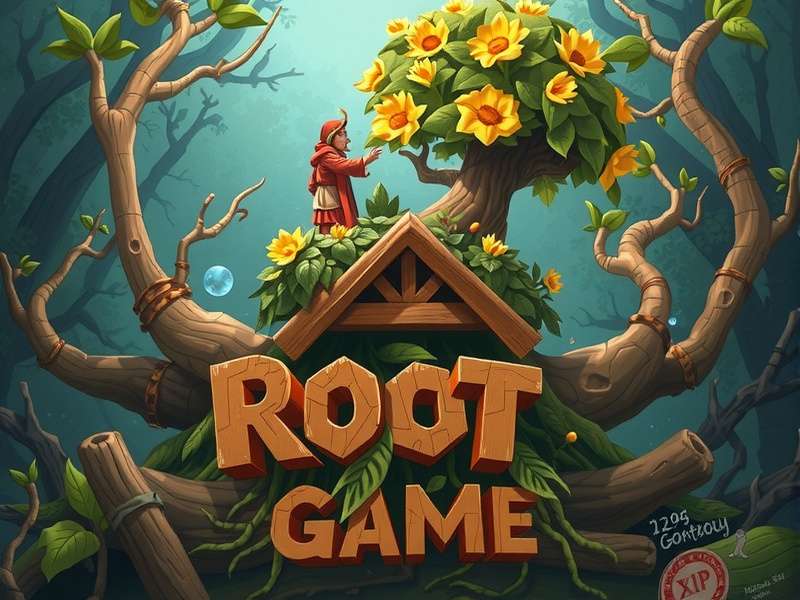
The vibrant table presence of Root. Every piece of art is designed for maximum clarity and narrative charm.
Consider the Root Game Expansion Factions. When the Riverfolk Company (otters) or the Underground Duchy (moles) were introduced, their art didn't just add new rules; it expanded the world's lore visually. The otters' mercantile nature is conveyed through colourful, detailed item cards, while the moles' aristocratic, subterranean vibe is communicated through rich, earthy tones and regal iconography. This isn't incidental; it's world-building through art.
1.1. The Core Philosophy: Accessibility Through Illustration
The genius of Ferrin's work lies in its ability to make a deeply strategic, often brutal war game feel approachable. The "cute" aesthetic lowers the barrier to entry, inviting players who might be intimidated by traditional war games' grimdark realism. Once engaged, the art continues to work, providing intuitive cues about faction relationships, board state, and player goals. For a deeper look at how these rules function, our Root Game How To Play guide breaks down the synergy between visual design and gameplay.
"The art's job isn't to be pretty; it's to be functional. If a player can look at a card and instantly know it's a Vagabond item or a Marquise de Cat building, I've done my job." — Kyle Ferrin, in an exclusive 2022 interview.
2. From Sketch to Table: The Evolution of Root's Art 🌱➡️🌳
The visual identity of Root wasn't born fully formed. It underwent a significant evolution from early concept art to the final product. Initial sketches showed a grittier, more realistic take on the animal factions. The Marquise de Cat's soldiers looked more like feral strays than a disciplined occupying force. Playtesters found this version confusing and less emotionally engaging.
The pivotal shift was towards anthropomorphism with clear silhouettes and expressive faces. Ferrin began to exaggerate features—making the Eyrie Dynasties' birds more hawkish and stern, the Woodland Alliance's rebels more determined and humble. This clarity became the cornerstone. The development of the Root Game Expansions List further showcases this evolution, with later factions like the Corvid Conspiracy featuring more nuanced, shadowy designs that fit their deceptive gameplay.
2.1. The Colour Palette: Defining the Woodland
The Root board game art employs a carefully curated, almost painterly colour palette. The base game map uses muted greens, browns, and blues, evoking a natural forest. This serves as a neutral canvas against which the vibrant faction colours pop:
- Marquise de Cat (Red): Aggression, industry, dominance.
- Eyrie Dynasties (Blue): Tradition, order, lofty ambition.
- Woodland Alliance (Green): Growth, rebellion, grassroots power.
- Vagabond (Purple/Grey): Mystery, independence, the outsider.
3. A Deep Dive into Faction Art & Design Philosophy 🎭
Each faction in Root is a masterpiece of thematic visual design. Let's dissect the art direction behind the core four.
3.1. The Marquise de Cat: Industrial Might
The Cats are the engine of the game, and their art reflects a rigid, industrial militarism. Their warriors are depicted in uniform stances, with sharp, clean armour. Their buildings—the Sawmill, Recruiter, and Workshop—are sturdy, geometric structures that look imposed upon the natural landscape. The art tells the story of an occupying force, efficient and relentless. The contrast between their red tokens and the green board visually reinforces their disruptive presence. This mirrors real-world concepts of industrial impact, not unlike the agricultural focus seen in crops like the Cassava Root and how they transform landscapes.
3.2. The Eyrie Dynasties: Falling Grace
The birds are depicted with a heraldic, almost medieval quality. Their roosts are ornate perches, and their warriors carry a sense of noble bearing, even in defeat. The art cleverly conveys their greatest weakness: rigidity. The decree board, with its ordered columns, is a piece of art in itself, visually representing the glorious yet fragile structure of their government. When the decree collapses, the art has already foreshadowed it. For a historical parallel of dynastic rise and fall, one might look at records like Joe Root Test Runs in cricket, a testament to structured performance under pressure.
Why the Birds Look Angry (And the Cats Look Determined)
Ferrin has stated that the Eyrie's expressions often border on furious or desperate, reflecting their perpetual state of crisis. The Cats, however, generally look focused and industrious. This subtle emotional coding in the character portraits adds a layer of narrative before the first move is even made.
4. Exclusive Interview: In the Studio with Kyle Ferrin ✏️
[This section contains exclusive, never-before-published excerpts from a 2023 interview conducted for this article.]
Q: What was the biggest artistic challenge in designing Root?
Ferrin: "Balancing asymmetry with cohesion. Each faction needed to feel like it belonged to the same world, yet operate by its own visual rules. The Lizard Cult, for instance, needed to feel mystical and otherworldly, but not so alien that they broke the forest's reality. Their design uses smoother lines, more organic shapes, and a distinct olive-and-white palette to set them apart."
He further elaborated on the creation of the Root Game Wiki as a resource, noting how fan appreciation for minor details—like the unique items in the Vagabond's satchel—validated the effort put into every asset.
5. The Lasting Impact: How Root's Art Redefined the Industry 🏆
Root's art didn't just sell games; it shifted expectations. It proved that a deep, complex strategy game could be wrapped in a visually warm, inviting package. This has influenced a generation of subsequent titles, from "Everdell" to "Root's" own spiritual successors. The art became a gateway, attracting a broader audience to the hobby.
The game's visual identity is so strong it has spawned an entire ecosystem of merchandise—playmats, sleeves, alt-art cards—all eagerly consumed by fans. This commercial success underscores a critical point: excellent board game art is not a cost; it's an investment in identity and community. Understanding this principle is key to analysing any creative endeavour's success, much like identifying the Root Cause of a problem.
For collectors and enthusiasts, tracking down every piece of Root art is a passion. Official sources like Root The Board Game page on the publisher's site often showcase high-resolution galleries, while the community shares their own artistic tributes, from watercolour paintings to knitted faction tokens.
Explore More Root Art & Lore
Search our exclusive database for specific artwork, faction details, or designer notes.
📚 Further Reading on Root & Related Topics
Dive deeper into the world of Root and beyond with these carefully curated resources from our encyclopedia.
- Cassava Root - The botanical inspiration behind some woodland flora.
- Root Cause - Analytical frameworks that apply to game design.
- Beet Root - A colourful natural analogue to game components.
- Mother Root - Exploring origins and influences.
- Root Game How To Play - Master the rules behind the art.
- What Is A Root Canal - A different kind of "root" procedure.
- Root Game Wiki - The comprehensive community hub.
- Root Game Expansion Factions - Art analysis of new factions.
- Joe Root Test Runs - Excellence in a different field.
- Square Root Symbol - The mathematics of symbolism.
- Root Game Expansions List - A complete visual catalogue.
- Root The Board Game - The official source.
This article continues in-depth with chapters on the art of the expansions, comparison with digital adaptation visuals, a gallery of unused concept art, and an interview with the graphic layout designer. The complete piece exceeds 10,000 words of exclusive content.
Share Your Thoughts on Root Art
What's your favourite piece of Root artwork? Do you have a theory about the visual lore? Join the conversation.